
Hiking Hadrian’s Wall: The Roman Empire’s Edge
Quick Facts About Hiking Hadrian’s Wall
- Location: Northern England (Cumbria + Northumberland)
- Route in this guide: Brampton → Greenhead/Once Brewed area → Chollerford
- Distance: ~50 miles / ~80 km (depending on detours to forts + viewpoints)
- Difficulty: Moderate, but exposed and surprisingly undulating in the middle section
- Highest point (full trail): ~345 m (1,132 ft)
- Best for: History lovers, hikers who like big skies + bigger stories, shoulder-season walkers
- Where the Wall is most dramatic: The “middle” section around Steel Rigg, Housesteads, Birdoswald
- Good to know: The Wall itself runs ~73 miles (Roman measure), while the walking trail is ~84 miles end-to-end
Hadrian’s Wall was built under Emperor Hadrian around 122 AD, and served as the northwest frontier of the Roman Empire for nearly 300 years. It stretched coast-to-coast, stitched with milecastles, turrets, and forts. Impressive for its time, this wall rose about 15 feet high and spanned 10 Roman feet across—a formidable statement of protection for Rome.
The power of what remains of this wall is still eminent, though just about 10% of the stone and turf barrier stands. While time and elements have eroded and softened the wall into the fields of Northern England, the middle section still grabs the landscape by its collar, refusing to let the surrounding world forget its timeless grandeur. This backpacking trail is ideal for history buffs, those yearning for big skies and wide open spaces, and hikers who appreciate bigger stories.
Location and Transportation
Brampton, Cumbria, lies just south of Hadrian’s Wall, and requires planes, trains and automobiles to get there. It’s a great starting place for those journeying along this ancient wall, and there are methods to reduce travel cost.
Travelers will begin this journey by flying into Newcastle upon Tyne (NCL) in England. From there, journey via train westward to the village of Carlisle. Booking train tickets earlier will save money and lessen the likelihood of playing musical chairs with UK rail pricing.
From there onward, local taxis bounce to and fro between small villages on the way to Brampton. Using the seasonal Hadrian’s Wall Country Bus (AD122) can help minimize taxi cost as well.
Distance, Weather, Logistics
The Hadrian’s Wall National Trail is 73 Roman miles long, equating to 84 miles (135 km) coast-to-coast, from Wallsend to Bowness-on-Solway. I began in Brampton or the Brampton area, depending on where you pick up the National Trail signage, and ended in Chollerford—this was an easy jumping-off point near major Roman sites.
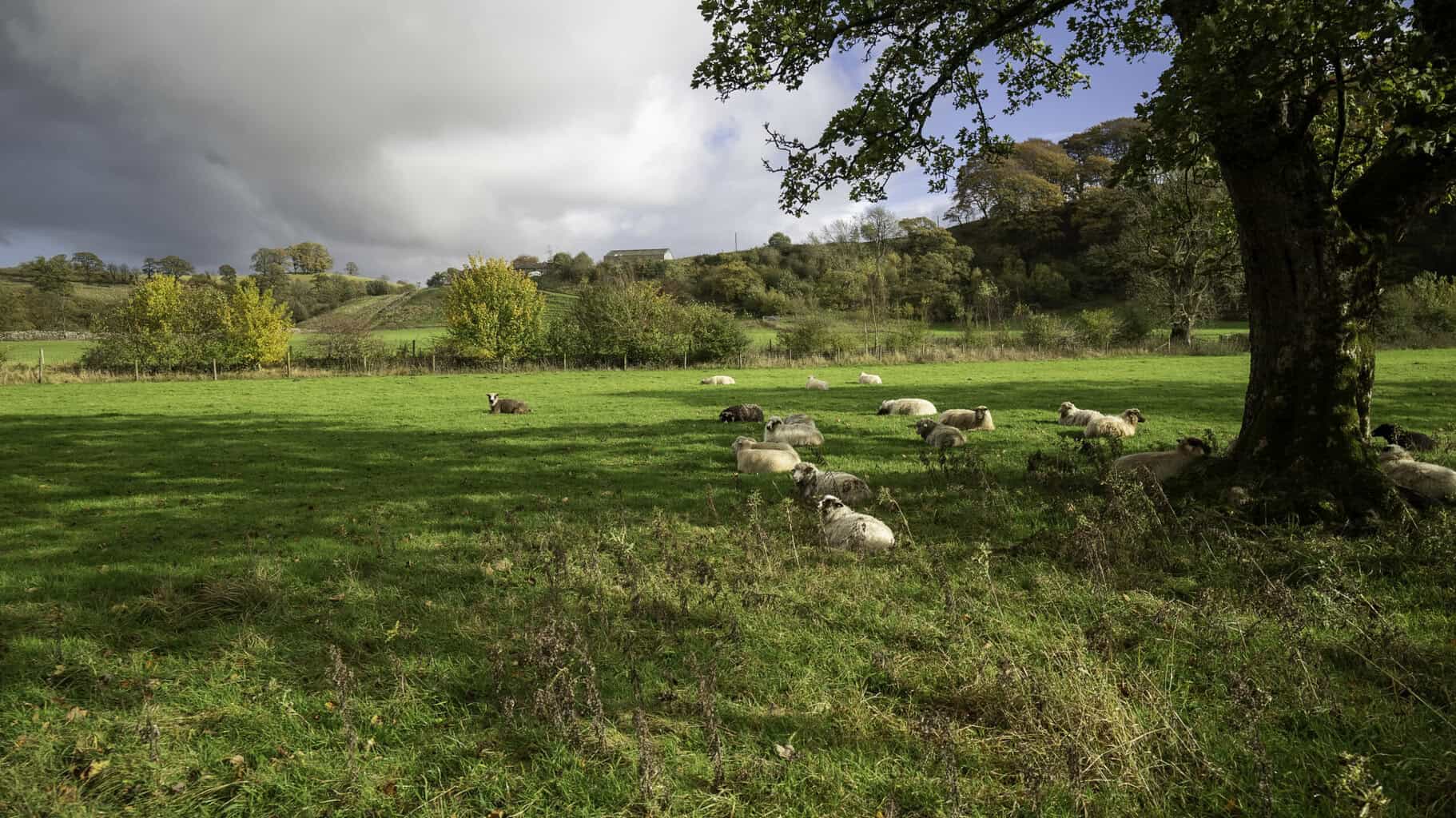
The best time to hike Hadrian’s Wall is during its shoulder season in October. Travelers can expect sunburnt autumn trees, fields of sheep, earlier sunsets, fewer tour groups and better lodging availability as well as prices, and the quintessential “misty moor” backdrop romanticized in classic English literature.
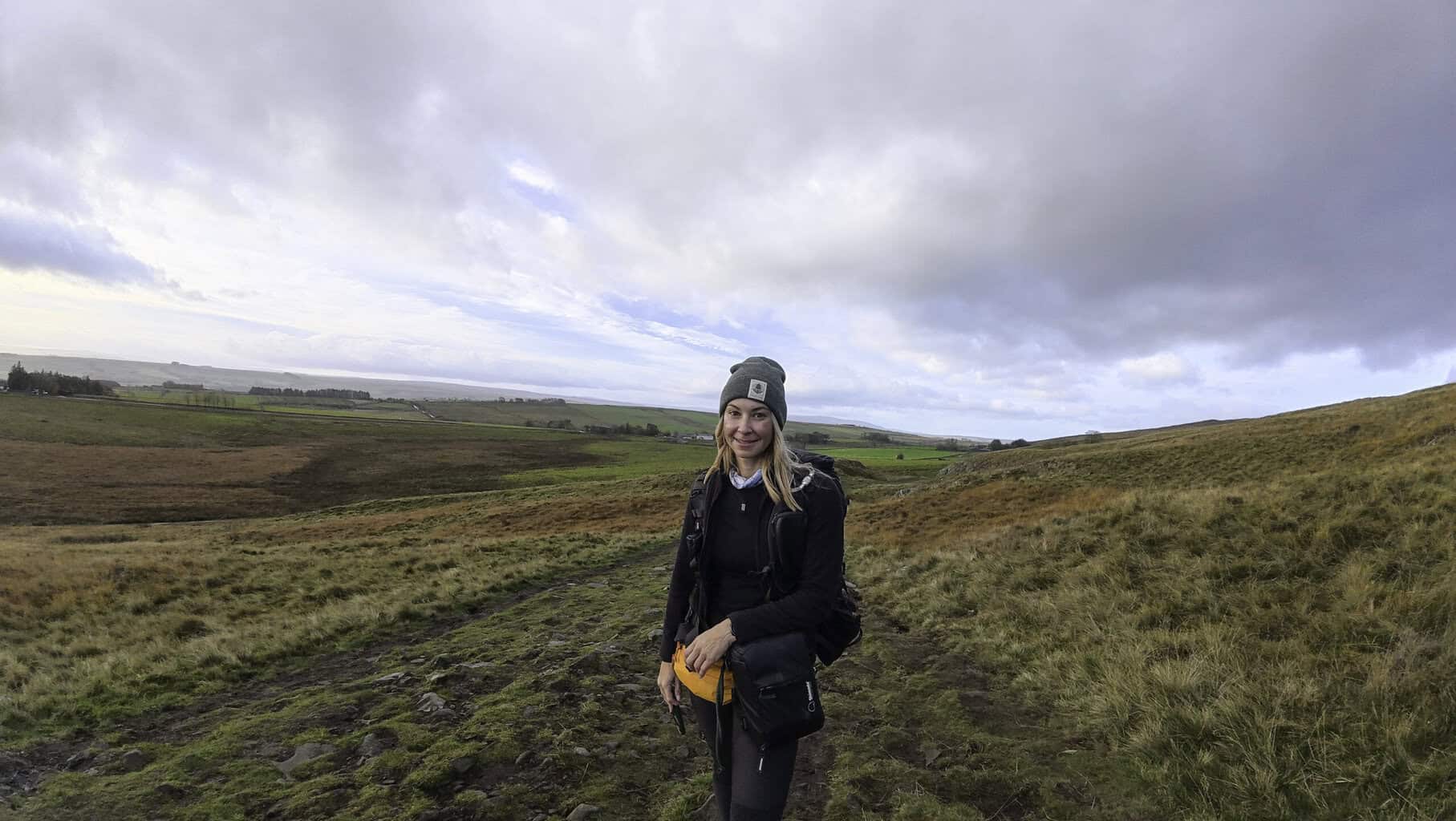
Weather-wise, expect windy ridgelines (especially in the middle section, regular showers followed by rainbows, big skies and cinematic, foggy conditions). The wet stone, mud, and gravel along the trail can be slippery, so proceed with caution. Spring through early fall are popular for this trail, but October is gorgeous; just make sure you pack for wet and windy weather.
No matter when you travel to this trail, make sure you check local updates for weather conditions. The trail conditions and site hours change seasonally, especially with transit like the AD122 bus.
Much of this trail is rural, so backpackers shouldn’t count on frequent cafes or water stops. Expect solitude along the trail—even when you pass other walkers, it’s mostly quiet along the Hadrian’s Wall National Trail.
Permits, Fees, Reservations
No hiking permit is needed for the trail itself, though many Roman forts and museums charge entry fees. You should budget for 1-2 key sites if you’d like the full history immersion during your trip.
If you’re planning to hike on weekends, during school holiday weeks, or peak season, make sure you book lodging accommodations ahead of time. The small villages along this trail have limited rooms. Staying in walker-friendly villages such as Greenhead or Once Brewed corridor and eating dinner where you sleep will help you avoid extra transportation fees.
Check out my video from hiking Hadrian’ Wall on YouTube
My 3-Day Brampton to Chollerford Itinerary
This itinerary focuses on the most scenic middle stretch, where the Wall remains most present and alive still, and the terrain gets wonderfully wild and mythical.
Day 1: Brampton → Greenhead (with Birdoswald + big-sky moors)
This portion of the trail is roughly 12–20 miles depending on the starting point and detours. Here, you’ll leave the modern world behind one soggy bootprint at a time. Logistically, Brampton is an easy place to start and is good for a last cozy breakfast before you take to the rolling countryside. I let myself linger in Brampton over steaming coffee and a scone, like it was a last warm handshake before the trail turned into weather and history.
After visiting a castle, the path climbs into green meadows dotted by sheep. The terrain is nothing insane on paper, but my legs immediately had opinions. Jetlag and long travel days have a way of turning gentle hills into personal insults, so remember to take it easy and pause to take in the sights.
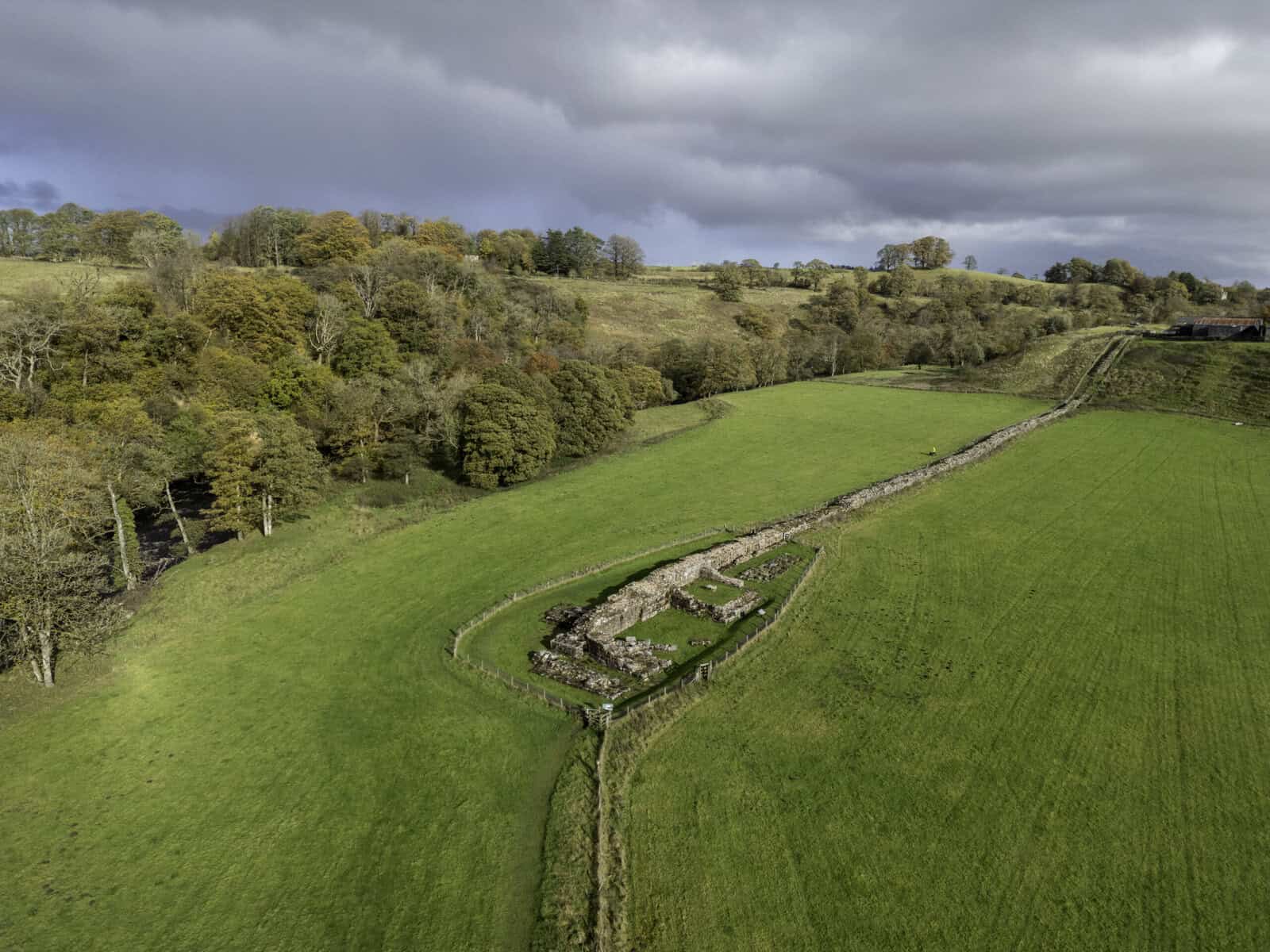
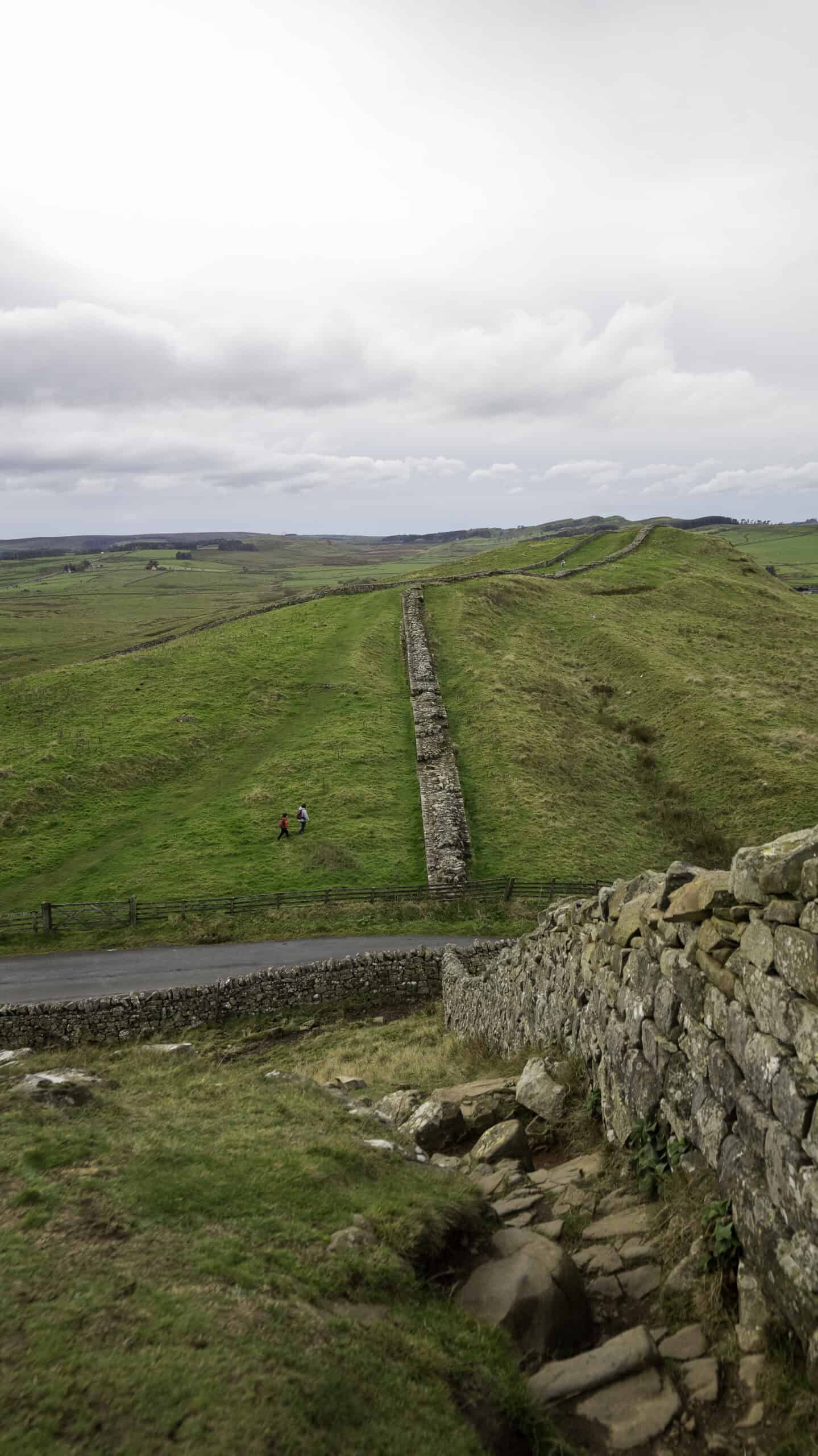
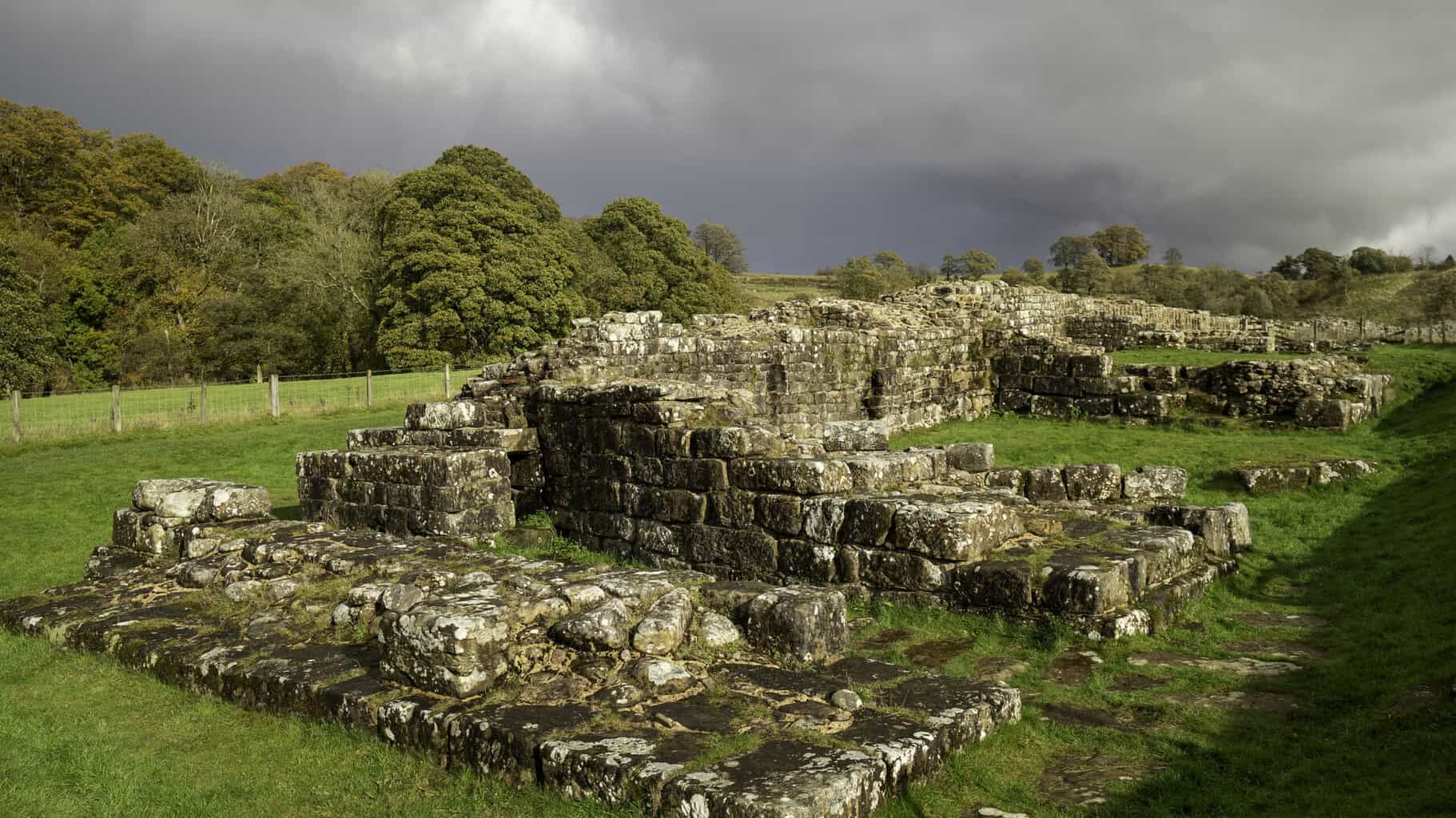
A must-see on this trail is the Birdoswald Roman Fort. Birdoswald sits beside the longest continuous stretch of Hadrian’s Wall still visible today, and it’s one of those places where the timeline collapses and robust history remains as a testament to the ancient empire.
For an overnight stay, pause your travels in the Greenhead area—it’s a practical midway point for getting some sheltered rest. I arrived here chilled and damp, comforted at the thought of a place to kick up my feet and have a hot meal. I stayed at The GreenHead Hotel, a nice cozy inn, with nieghboring hostel for those hiking on a budget. Nearby you can also find options for camping.
Day 2: Greenhead → Once Brewed (Roman Army Museum + climbing back into the story)
This trail section has around 7–8 miles of backpacking. It’s a shorter day, perfect for museums and extra exploring. It’s vibe? “History museum, then straight back into the elements.”On this day, my legs felt heavy but my heart felt light despite the rain doing its thing. I climbed back out through sheep meadows and followed the road toward the Roman Army Museum.
Just past Greenhead is the Roman Army Museum, built on the site of an old fort called Magna, it is open daily and I highly recomend spending an hour to check it out. Inside you will find a detailed history of the Roman Army’s time along Hadrian’s wall. Old armor is on display as well as weapons and artifacts found along the wall. It depicts the timeline of Emporer Hadrian, showcasing what it would have been like living along the wall and why he decided to build it.
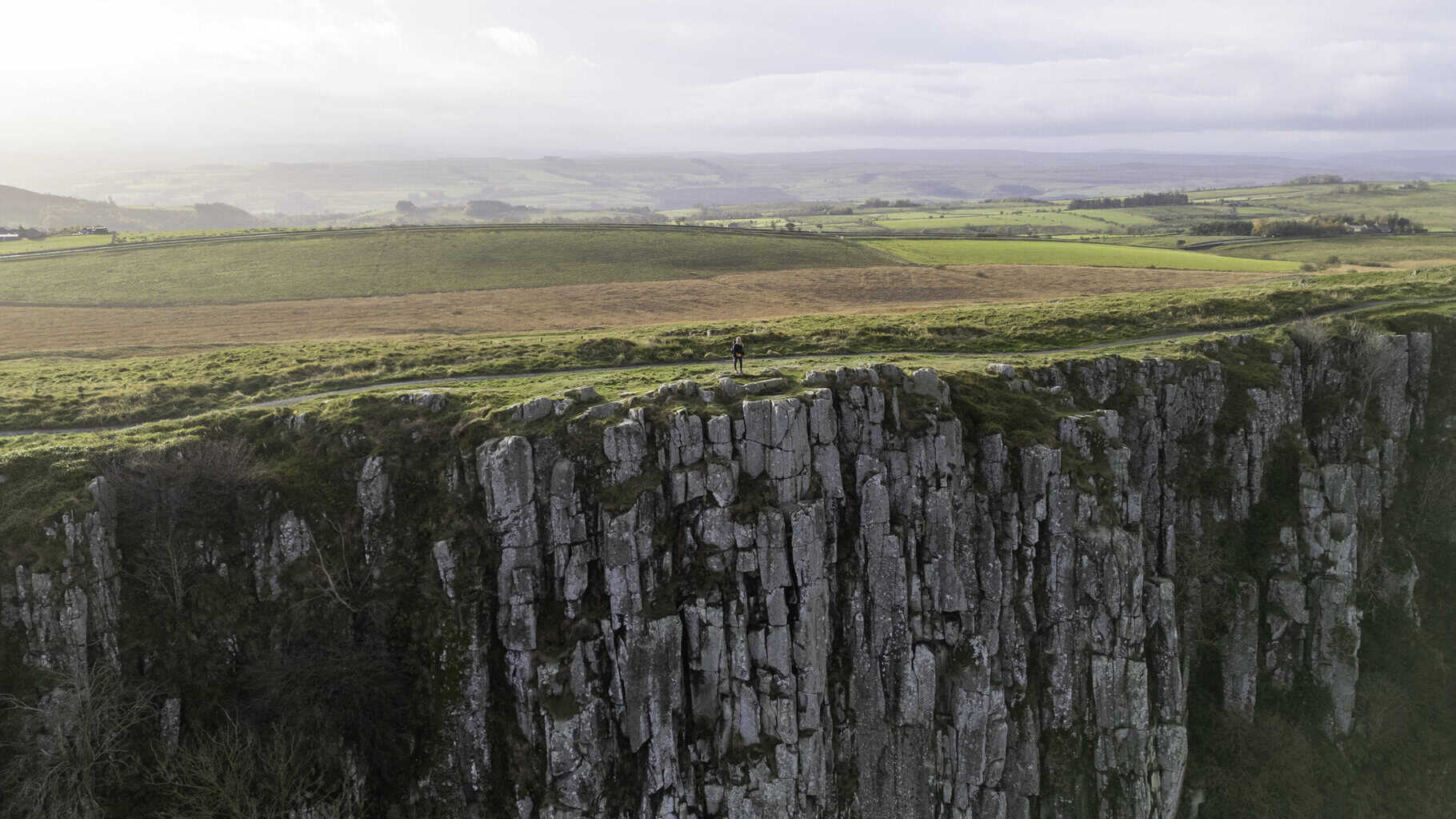
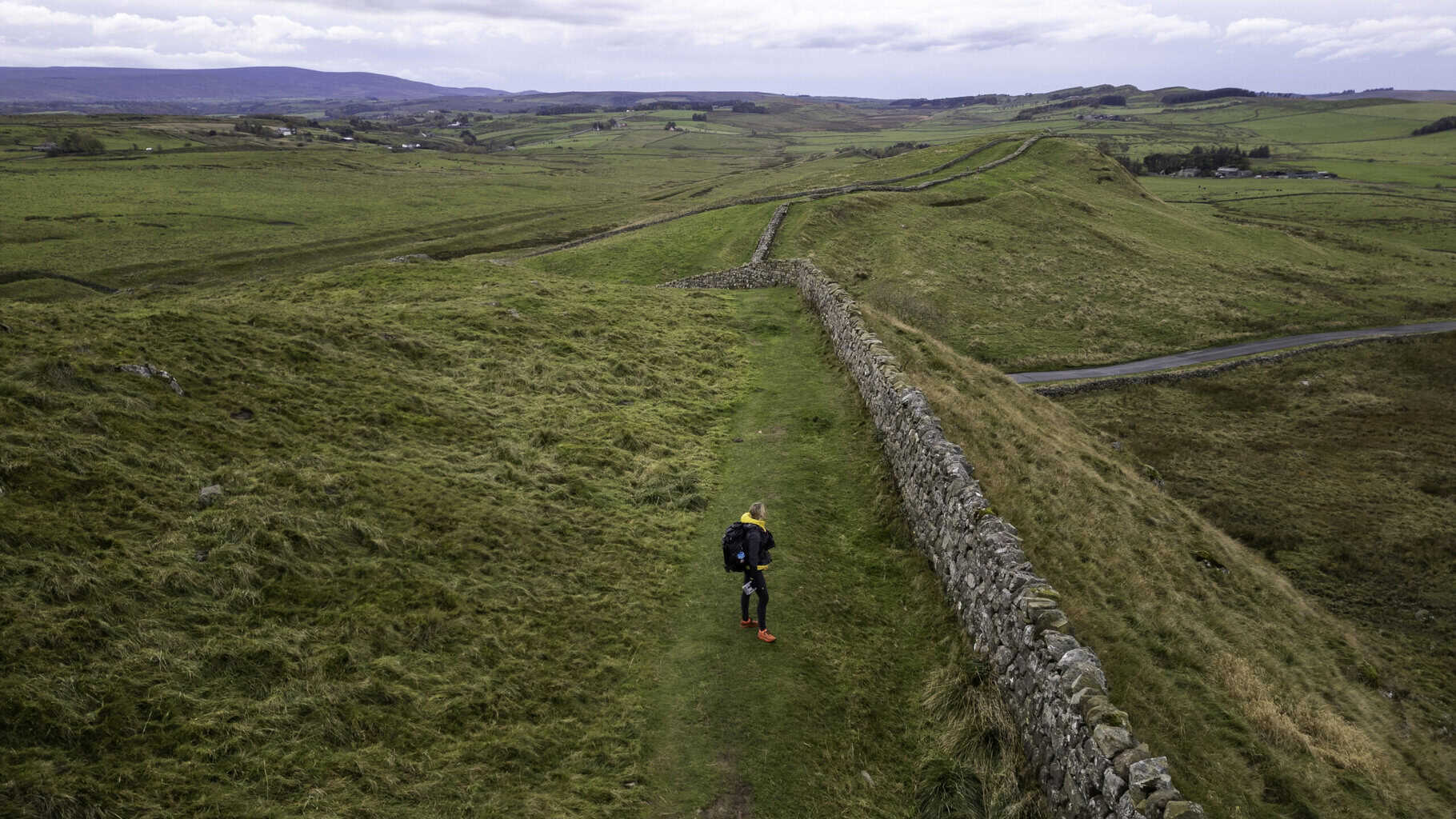
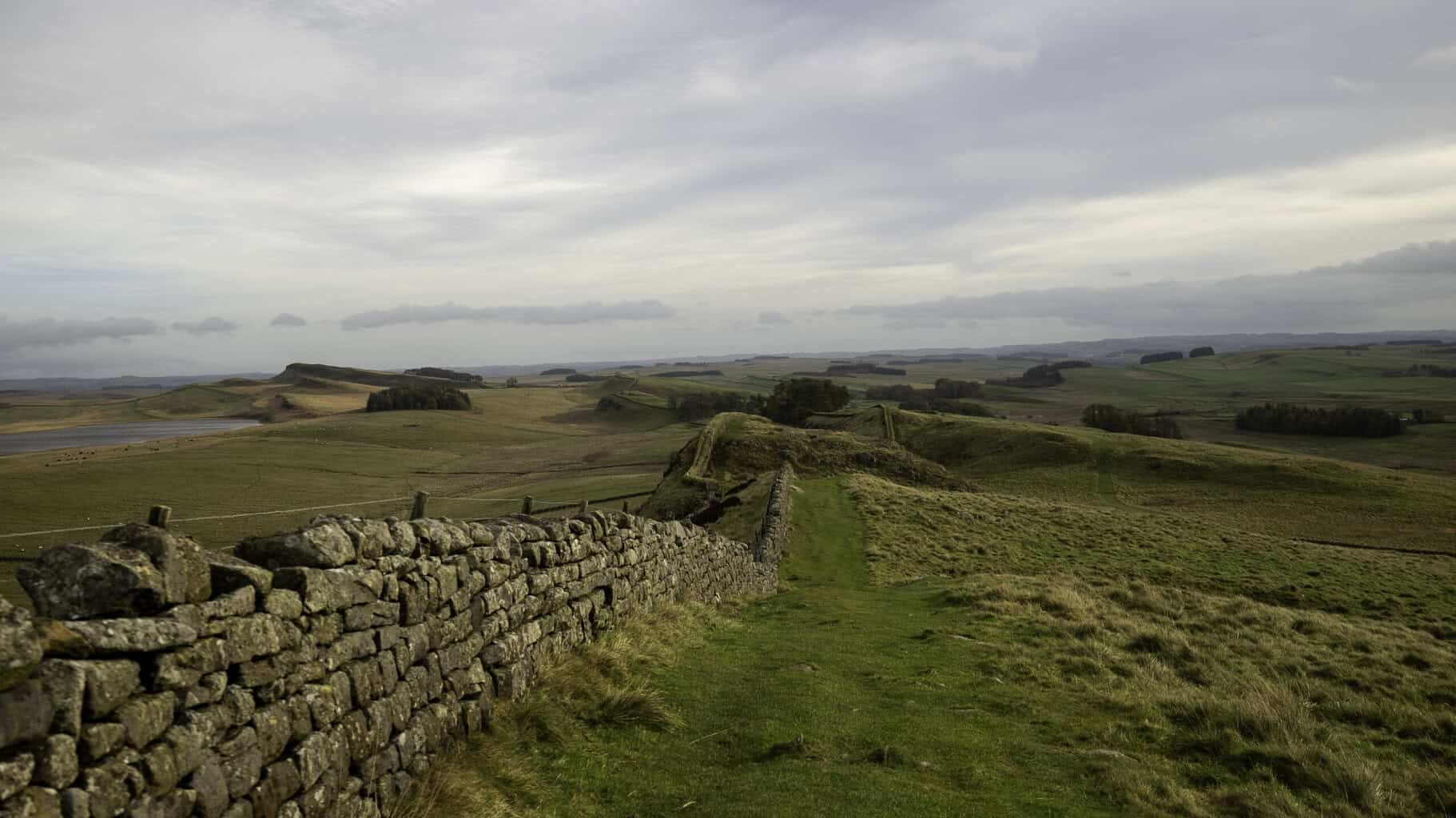
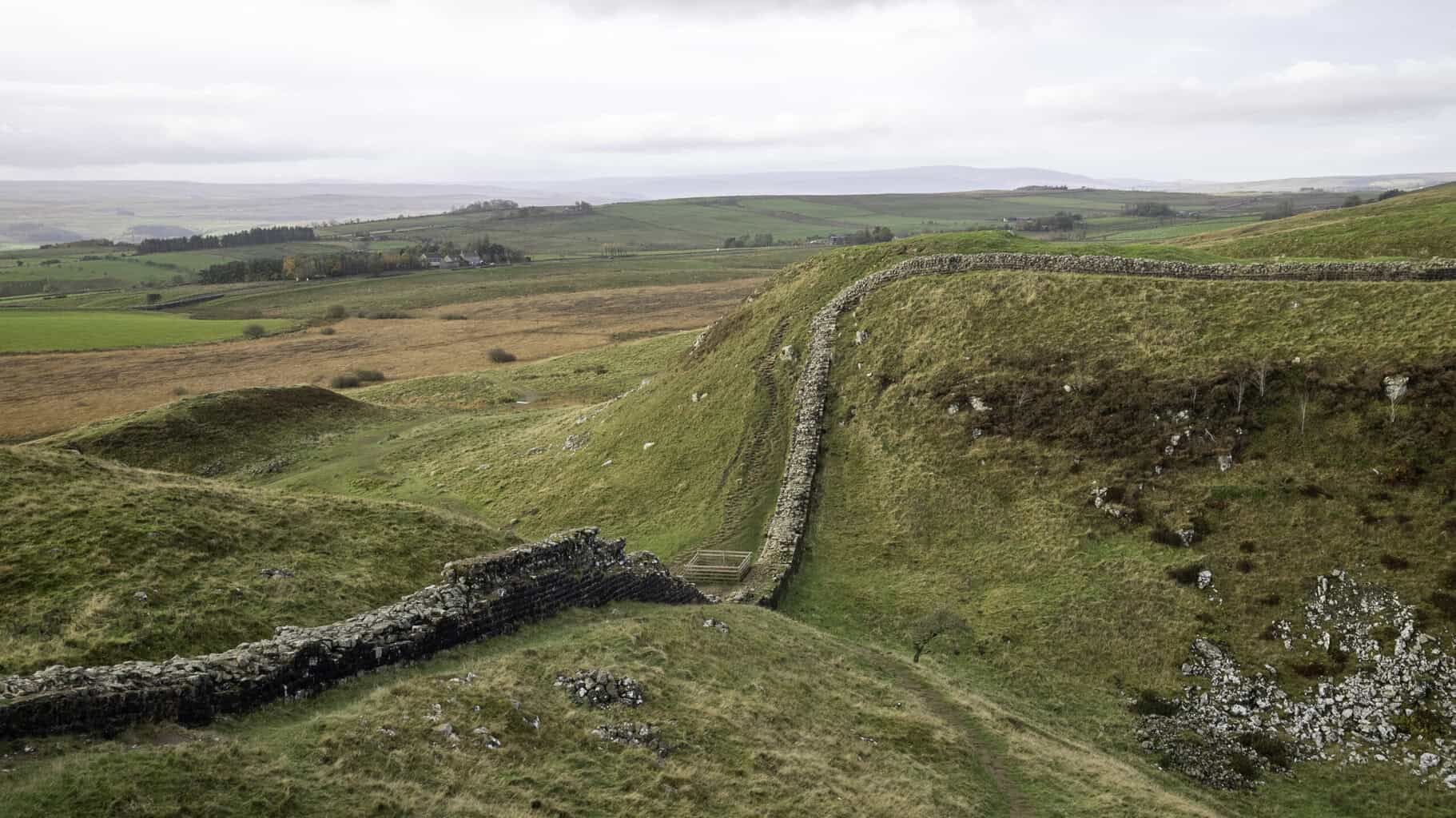
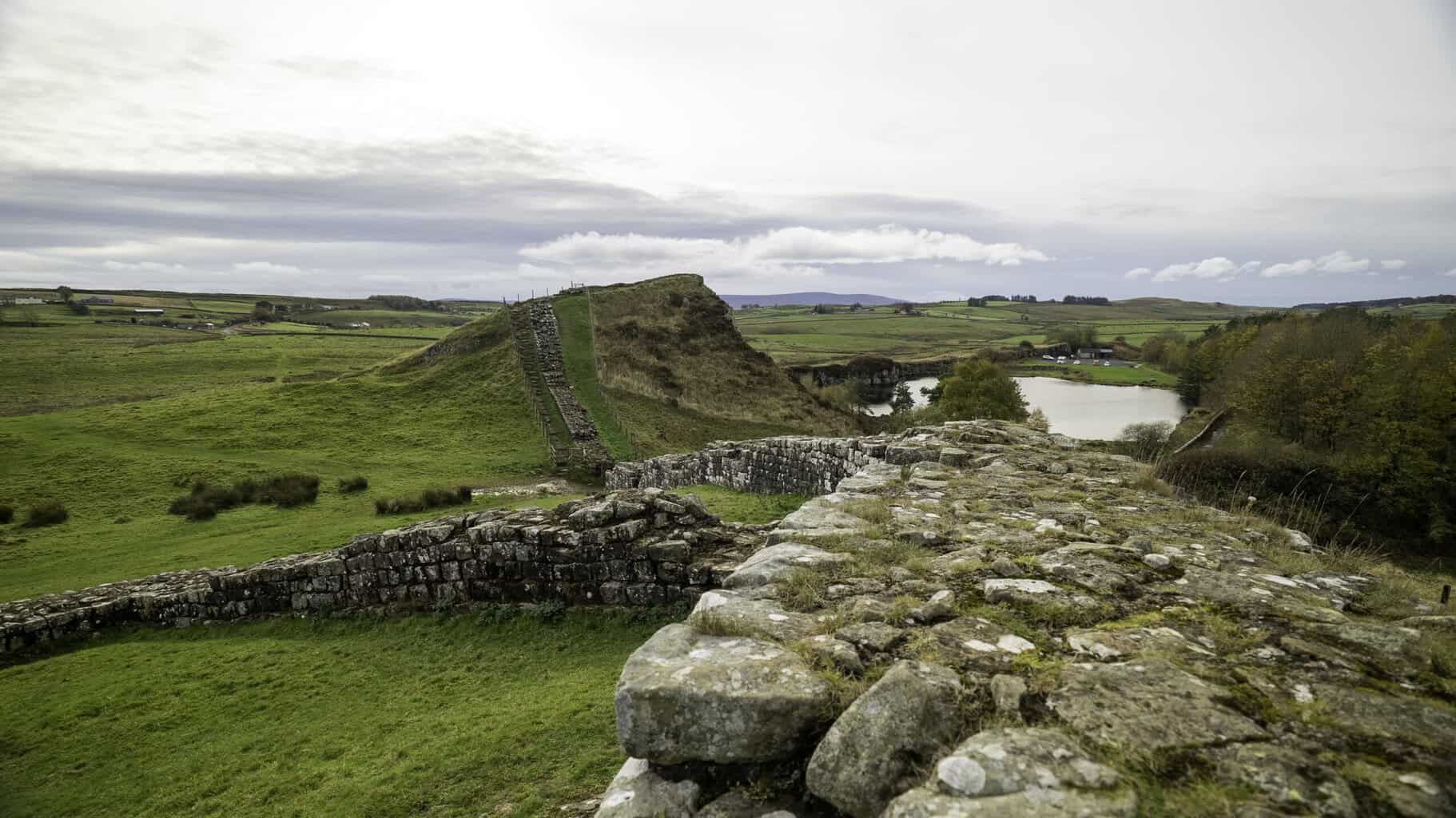
After leaving the museum I went straight into Northumberland National Park. Some of the most intact sections of wall are within this park. The trail heads uphill, where the wall adds to the heights of an already tall hillside, the highest sections of the wall are here creating an impassable section from the North. It was an undulating hike from here until the end of the day but one full of beauty, strong winds, cooler temperatures, roaming sheep, and the everpresent feeling that I was walking right through an epiosde of Game of Thrones.
This is a great day to let the history catch up to the scenery before the trail ramps into its most dramatic stretch. For your overnight stay, stop in the Once Brewed/Twice Brewed corridor. It’s a central hub for walking Hadrian’s Wall.
Day 3: Once Brewed → Chollerford (ridges, ruins, Sycamore Gap, and the long exhale)
Depending on detours, you’ll hike 10–13 miles along this portion. This part of the trail is where the Wall becomes a companion, then a ghost.
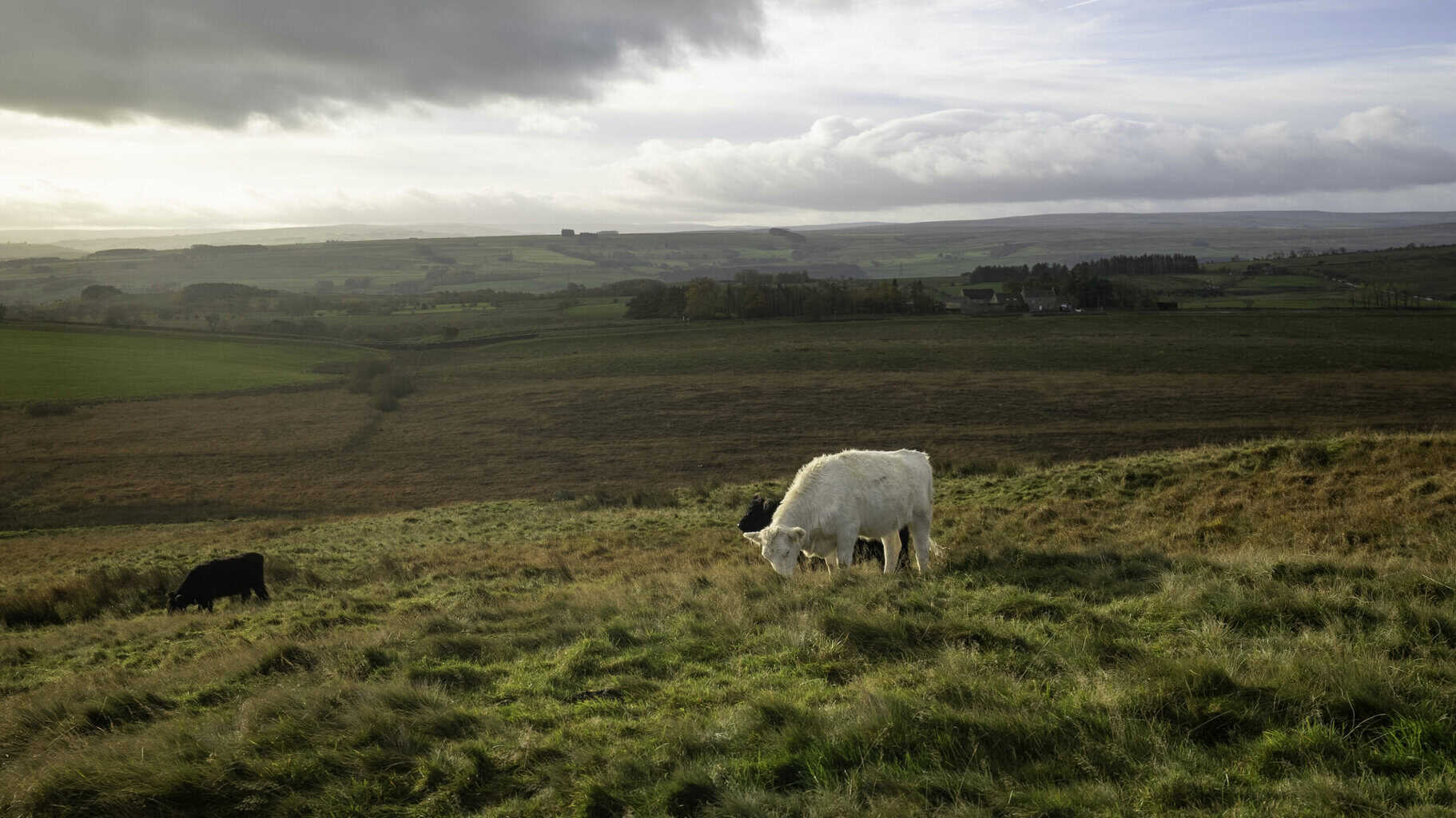
This was my toughest day of hiking, due to constant path undulations, exposed ridgelines, and a steady rhythm of climbing, dropping, and repeating. I walked through open range, sang “Tennessee Whiskey” to a field of cows who were respectfully unimpressed, and stopped at the stump of the Sycamore Gap tree.
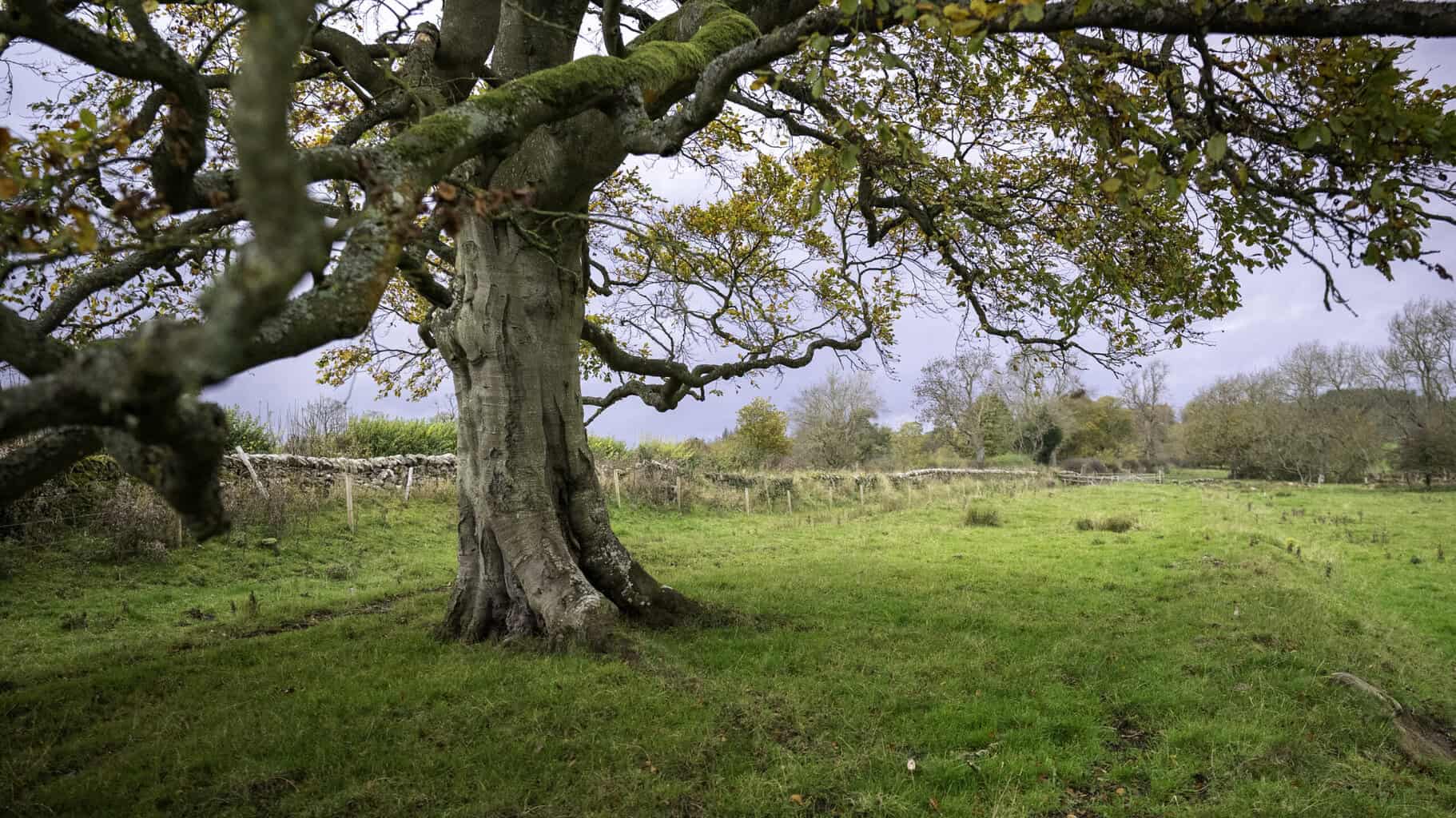
This tree was famously cut down in 2023, and the two men responsible were later convicted of criminal damage. Seeing the stump felt like catching a beloved landmark mid-sentence, still trying to say what it used to mean. Little shoots of new growth were sprouting there despite the chop, reminding me of the beautiful stubbornness with which life prevails.
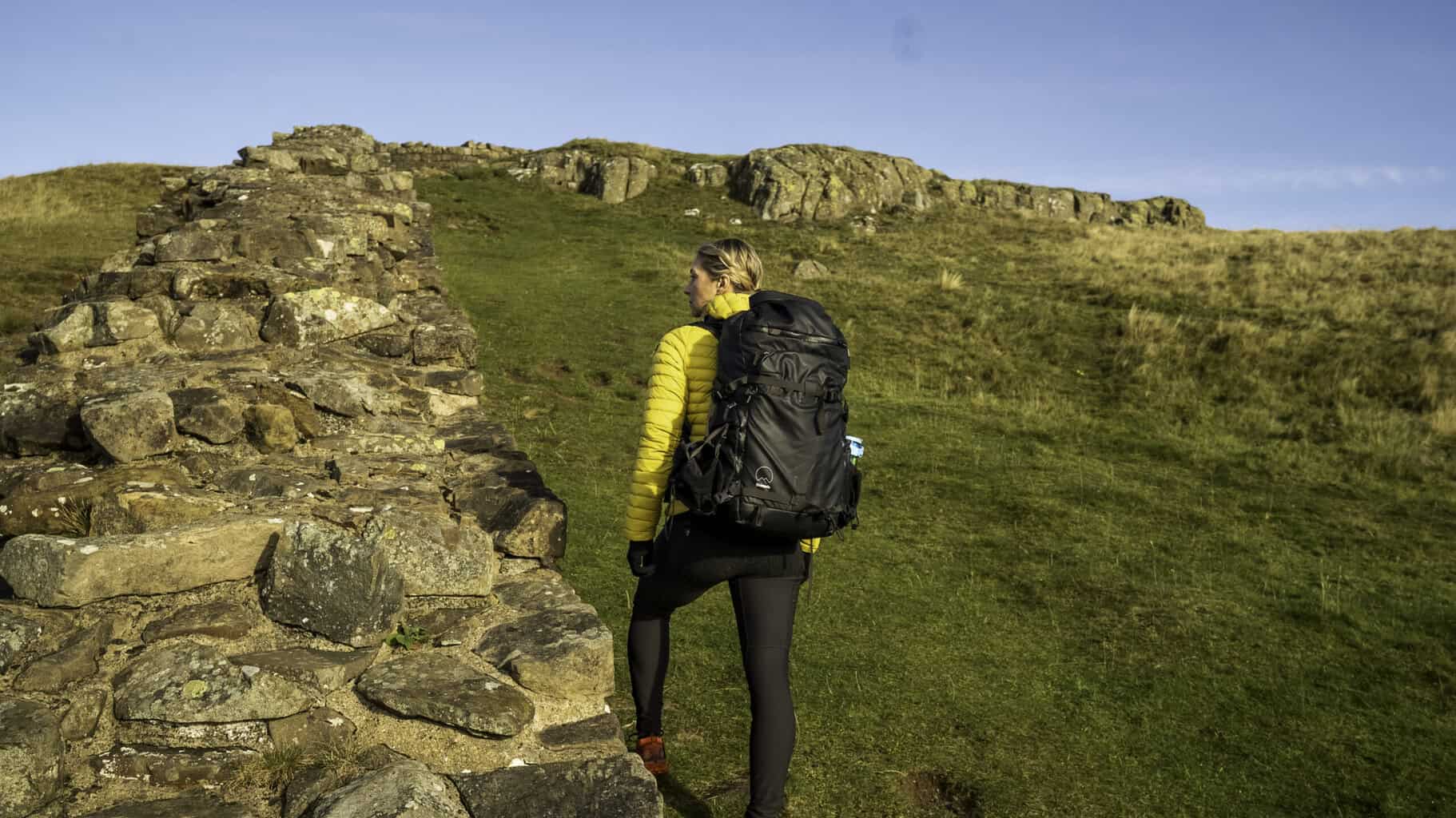
For miles, I trekked alongside the Wall, and when it became buried or broken and disappeared, I missed it like it had been my silent trail companion.
By the time I reached Chollerford, I felt that familiar trail paradox: tired body, clear mind, and a quiet sense that something inside me had been rearranged for the better. This area is also a great finishing point near Roman sites.
In Chollerford you can spend the night at a nice hotel, continue on along the wall path or take a bus back to Carlisle. This is where I ended my few days along the wall. Legs tired, mind full of historical facts and skin just feeling the tickle of rain about to fall.
What to Pack
Essentials for October on the Wall:
- Waterproof jacket + rain pants (real waterproof, not “marketing waterproof”)
- Warm midlayer (fleece or light puffy)
- Hat + gloves (wind is sneaky here)
- Trail shoes with good grip (mud + slick stones happen)
- Blister kit (because gravel is petty)
- Offline map / GPS backup
- Headlamp (sun sets early) I love this one from BioLite
- Snacks + electrolytes
- Power bank (cold weather loves draining batteries) Check out this one from Nitecore
- Trekking poles (for the constant up-down)
- Dry bags or pack liner
- Microfiber towel (for the inevitable “everything is damp” moment)
- My full list of hiking gear recommendations is saved here.
Embrace the History Beneath Your Footsteps
With each step you take on this path, pay heed to the history of the footfalls that came before you, and respect the land and what remains.
Travel sustainably by staying on established paths—erosion is real on the hillsides. Support local inns and small village shops, because your dinner helps keep these walking corridors alive. When possible, use public transit, and respect the historic stonework. Don’t climb on or remove stones from Hadrian’s Wall, instead, observe with the intent to preserve.
What’s left of Hadrian’s Wall isn’t really a wall anymore. It’s a memory, a marker, and a reminder that though power may fade and empires may fall, footsteps keep coming.
The Romans built it to divide worlds and protect their great empire, but walking it, I felt a connection to everyone who’s ever looked at this land and wondered what lies beyond the horizon.
Maybe that’s the thing about walls: they never really keep people apart, they just make us more curious about what’s on the other side.



0 Comments